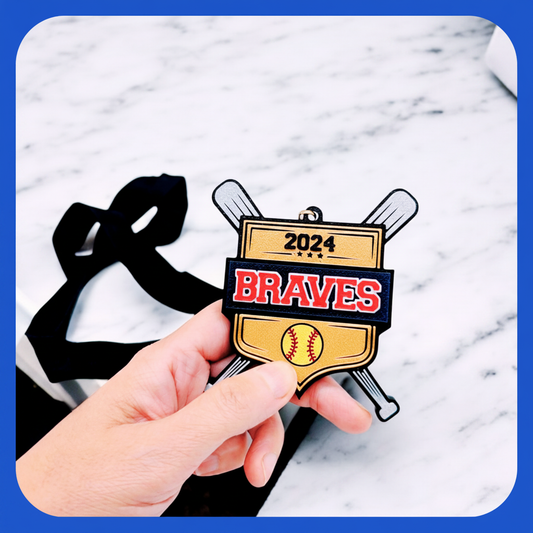
A team medal should feel exciting in a player's hands, not oversized for a young athlete or so small that it disappears in a team photo. That is the real question behind how to size team medals: choosing a size that matches the age group, the occasion, and the meaning of the moment.
For a weekend tournament, a compact medal may be exactly right. For an end-of-season celebration where every player is being recognized, a more substantial piece can feel more fitting. The best choice is not always the biggest medal. It is the one that looks balanced, wears comfortably, and feels like it was made for that team.
Start With the Players, Not the Medal
Youth teams cover a wide range of ages, and medal size should reflect that. A medal that looks great on a 16-year-old can feel heavy and oversized on a 6-year-old standing in a team lineup.
For younger players, roughly ages 4 to 8, a smaller medal in the 2 to 2.5 inch range is usually a comfortable choice. It is easy to wear, easy to hold, and still feels meaningful when it includes their name, team colors, or sport. At this age, personalization often matters more than size. A player who sees their own name and number on a medal is unlikely to think it is too small.
For players around ages 9 to 12, a 2.5 to 3 inch medal is often the sweet spot. It has enough room for a clear design, team name, season, and individual player details without becoming bulky. This is a practical size for most youth hockey, baseball, softball, soccer, basketball, and volleyball teams.
For teens, competitive programs, and major tournament awards, medals around 3 to 3.5 inches can carry more visual weight. These work especially well for championship events, league finals, all-star recognition, or a season that deserves a more formal keepsake.
How to Size Team Medals for the Occasion
The reason for the medal should guide the size just as much as the players' ages. Not every team moment needs the same style of award.
A participation medal is meant to recognize belonging. It says, “You were part of this team.” For that purpose, a smaller or mid-size medal is a thoughtful, budget-conscious choice, especially when ordering for a full roster. Adding the player name, jersey number, team logo, or season gives it personal value without requiring an oversized design.
End-of-season medals tend to be kept longer. Players may hang them in their bedroom, add them to a medal display, or tuck them into a memory box with photos and team keepsakes. A mid-size medal usually works well here because it feels substantial while remaining easy to store and display.
Tournament and championship medals can justify a larger format. The medal is tied to a specific achievement, and it may be presented in front of families, teammates, and other teams. A larger design can make the award feel more distinct, especially if it includes the event name, placement, date, and sport.
Coach gifts are a separate case. A coach medal can be slightly larger than player medals or use a different shape or design treatment. The goal is to make it feel intentional, not simply like an extra medal from the player set.
Think About What Must Fit on the Design
Medal size determines how much information can be read at a glance. This matters most for personalized team orders, where the design may include a player name, number, team name, sport icon, season, and placement or event details.
A smaller medal can still look polished, but it needs a focused layout. Choose the details that matter most. For a young team, that may be the player name, team name, and a bold sport graphic. Trying to fit every season statistic, a long event title, and several logos into a small space can make even a great design feel crowded.
A larger medal gives you more room, but it should not become a page of tiny text. Strong medal designs have a clear hierarchy: the player or team is the focus, the sport or achievement supports it, and smaller details provide context. If a parent has to hold the medal close to read the important part, the layout likely needs simplifying.
Team colors deserve space, too. A medal does not need to use every color in the uniform. Often, one main color and one accent create a cleaner result. That is especially helpful when matching a full roster, bag tags, player nameplates, or other team items.
Do Not Forget Ribbon Length and Comfort
The medal is only half of the experience. The ribbon affects how it sits around a player's neck, how it looks in photos, and whether it is comfortable during a post-game celebration.
For younger athletes, a lighter medal with an appropriately sized ribbon is usually the better choice. Heavy medals can pull forward or feel awkward over a jersey, jacket, or bulky hockey equipment. A smaller medal also tends to sit more naturally during photos, rather than covering the front of the uniform.
Older players can comfortably wear a larger medal, but balance still matters. A wide, bold ribbon paired with a very large medal may look impressive on a display table yet feel excessive when worn. If your team will receive medals during a ceremony, picture how the combination will look on players of different heights.
If medals are being handed out after a game, consider the season and the sport. Outdoor fall soccer, spring baseball, and rink-side hockey events often involve layers. A ribbon needs enough length to sit over a hoodie or team jacket without becoming loose or tangled.
Match the Size to Your Team Order Budget
For coaches, team managers, and parent volunteers, medal sizing is also a budget decision. Ordering for 10 players is different from ordering for 22 players, multiple coaches, and a few extras for late additions or replacement needs.
A smaller medal can be a smart choice when personalization is the priority. Rather than putting the whole budget into a bigger blank award, you can choose a well-designed medal that includes each player's name and number. For many youth athletes, that personal connection is what makes the medal worth keeping.
A larger medal may make sense when the order is smaller, the event has a championship focus, or the team is recognizing a major milestone. It can also work well when the medal replaces another gift, such as a trophy or end-of-season keepsake.
There is no need to make every award identical across every occasion. A compact personalized medal for regular-season participation and a larger medal for a tournament win can create a clear sense of occasion without making the team order complicated.
Choose One Size for the Roster, With a Few Intentional Exceptions
In most cases, every player should receive the same medal size. It keeps the presentation fair, makes ordering easier, and gives the team a unified look in photos. This is especially true for recreational and youth teams, where celebrating the group matters more than ranking individual players.
The exception is usually recognition for coaches, team managers, or a special award such as sportsmanship, leadership, or most improved. Those can use a different design or a slightly larger size while keeping the player medals consistent.
If you are ordering for multiple divisions or age groups, avoid assuming one medal size works for everyone. A 2.5-inch medal may be perfect for an 8U softball team but feel modest for a high school tournament. Review each group separately, even if the design language stays consistent.
A Simple Way to Make the Final Choice
Before placing a full-roster order, ask three questions: Who will wear it? What are they being recognized for? What details need to be visible?
If the answer is young players, a team participation gift, and a simple personalized design, choose a smaller or mid-size medal. If the answer is older players, a championship achievement, and a design with more event information, move up in size.
A live design preview can be especially useful here. Seeing names, numbers, colors, and text together helps reveal whether a design has enough room before the order is finalized. That is a practical advantage when you are coordinating a whole roster and want every player’s medal to look intentional.
The medal your team remembers will not be measured only in inches. It will be the one that feels right when a player puts it on, spots their name, and realizes they were part of something worth celebrating.